- Home
- Important Dates
- Organizing Committee
- Scientific Program
- Abstract Submission
- Registration
- Presentation Guide
- Venue & Location
- Accommodation
- Registration Fee Waiver
- Exhibitors & Sponsors
Córdoba, Argentina – Electrochemistry and Functional Materials: From Fundamentals to Applications
You are cordially invited to the 44th Topical Meeting of the International Society of Electrochemistry, which will be held in Córdoba, Argentina 9-12 May 2027.
Be a part of this event!
The meeting is planned for three days: registration and welcome cocktail on Sunday and sessions from Monday to Wednesday, with the banquet on Tuesday evening. For each day it is planned to have a keynote of interest for the four main topics. Depending on the number of presentations, parallel sessions are possible.
Important Dates
- Opening date for abstract submission: 16 November 2026
- Opening date for registration: 15 December 2026
- Deadline for abstract submission: 11 January 2027
- End of early registration: 2 March 2027
- Registration deadline for presentation(s): 16 March 2027
- (All presenting authors of accepted abstracts are expected to register. Abstracts without a registered presenting author will be withdrawn from the event on 17 March 2027)
- Conference begins: 9 May 2027
Organizing Committee
Prof. Dr. Guillermina Luque (Chair), Universidad Nacional de Córdoba (Argentina)
Prof. Dr. Martín Zoloff Michoff (Co Chair), Universidad Nacional de Córdoba (Argentina)
Prof. Dr. Silvia Cere, Universidad Nacional de Mar del Plata (Argentina)
Prof. Dr. Ezequiel Leiva, Universidad Nacional de Córdoba (Argentina)
Prof. Dr. Gabriel Negrão Meloni: University of São Paulo (Brazil) D1
Prof. Maria Cuartero, KTH, Royal Institute of Technology (Sweden) D1
Prof. Dr. Roberto Torresi, Instituto de Química – Universidade de São Paulo (Brazil) D3
Prof. Dr. Ana Karina Cuentas Gallegos, Universidad Nacional Autónoma de México
Local Organizing Committee
Prof. Dr. Victoria Bracamonte, Universidad Nacional de Córdoba (Argentina)
Prof. Dr. Andrea Calderón, Universidad Nacional de Córdoba (Argentina)
Prof. Dr. Fernando Cometto, Universidad Nacional de Córdoba (Argentina)
Prof. Dr. Esteban Franceschini, INFIQC-CONICET (Argentina)
Prof. Dr. Arnaldo Visintin, Universidad Nacional de La Plata (Argentina)
Prof. Dr. Josefina Ballarre, Universidad Nacional de Mar del Plata (Argentina)
Prof. Dr. Victoria Flexer, Universidad Nacional de Jujuy (Argentina)
Prof.Dr. Paola M. Quaino, (Universidad Nacional del Litoral, Santa Fe)
Scientific Scope of the Conference
Electrochemistry and functional materials are central to the development of advanced technologies addressing current challenges in energy, sustainability, and industrial innovation. Advances in electrochemical materials, interfaces, and processes are enabling breakthroughs across diverse fields, including energy conversion and storage, corrosion and surface engineering, electrocatalysis, environmental technologies, sensing, and bioelectrochemistry.
This Topical Meeting will bring together researchers from across the electrochemical sciences to discuss recent progress in functional materials and interfaces, electrochemical energy conversion and storage, and functional electrochemistry for sustainable processes. The meeting will foster interdisciplinary exchange between fundamental and applied research, spanning charge transfer and interfacial phenomena, advanced materials and devices, analytical methodologies, and emerging electrochemical technologies.
List of Symposia:
- Symposium 1: Functional Materials and Interfaces, this symposium will focus on the design, synthesis, characterization, and understanding of advanced materials and interfaces relevant to electrochemical systems. Topics will include functional materials, interfacial phenomena, charge transfer processes, corrosion and surface engineering, nanostructured materials, operando and in situ characterization techniques, as well as theoretical and computational approaches to materials and interfaces.
- Symposium 2: Electrochemical Energy Conversion and Storage, this symposium will cover electrochemical technologies for energy conversion and storage, including batteries, supercapacitors, fuel cells, hydrogen technologies, and electrocatalysis. Topics will encompass the development of advanced materials, interfacial phenomena, reaction mechanisms, and emerging concepts aimed at improving the performance, safety, and sustainability of electrochemical energy systems.
- Symposium 3: Electrochemistry and Sustainable Processes, this symposium will encompass emerging and interdisciplinary areas of electrochemistry, including analytical electrochemistry, electrochemical sensors, bioelectrochemistry, soft and ionic materials, and novel electrochemical technologies. It will also address sustainable electrochemical processes such as CO₂ reduction, water treatment, pollutant removal, resource recovery, environmentally friendly electrosynthesis, and industrial electrochemistry. Special emphasis will be placed on innovative methodologies and functional electrochemical systems with societal and technological impact.
Division(s) involved in the organization
Division 1: Electrochemical Energy Conversion and Storage and Division 5: Electrochemical Process Engineering and Technology
Division 3: Electrochemical Energy Conversion and Storage and Division 5: Electrochemical Process Engineering and Technology
Abstract
Call for Papers
Abstract submissions are invited for oral and poster presentations. All abstracts must be submitted via the online submission system that will open on November 2026. The deadline for abstract submission will be January 2027. The abstract must be written in English and must not exceed one page (including figures, tables and references).
Registration
Registration opens on TBD
Please return to this page after that date to register.
Presentation Guide
Oral Presentation Instructions
• Presentations must be set up prior to the beginning of the session
• Preferred: Bring your presentation on a memory stick compatible with a PC computer
Alternatively: Personal laptop computers may be used, but you must ensure compatibility with the LCD projector prior to the start of the session. Also bring a memory stick as a backup.
Overhead projectors will not be supplied except upon special request at least one month before the conference and at the speaker’s expense.
Poster Presentation Instructions
Poster presentation size: 90-cm wide × 150-cm high (The A0 portrait format (84.1-cm wide × 118.9-cm high) is recommended for the posters).
Venue and Location
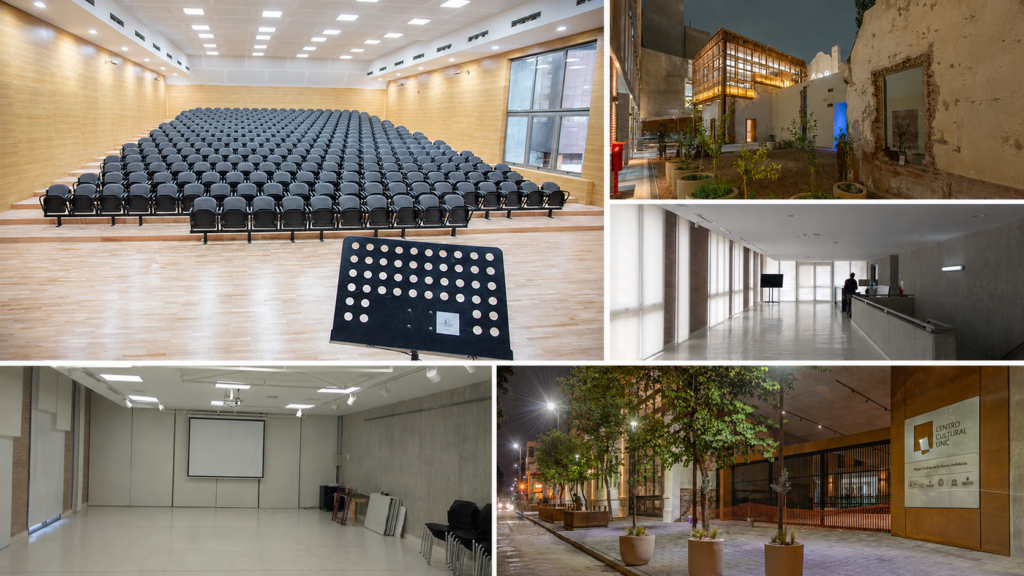
Conference Venue
Centro Cultural UNC, Córdoba, Argentina
https://www.unc.edu.ar/extensi%C3%B3n/centro-cultural-unc
Transportation
Located in central Argentina, Córdoba is easily accessible for both regional and international participants. The city is served by the Ingeniero Ambrosio Taravella International Airport, with direct connections to major hubs in South America and convenient links to international destinations via Buenos Aires and other key cities. Córdoba’s compact layout and efficient transportation system make it easy to move between the airport, hotels, and conference venues.
Visitors will find a welcoming and affordable destination, with a wide range of accommodation options, diverse dining experiences, and modern infrastructure suited for international events.
9 airlines operating to and from Córdoba
Direct connections to 11 cities abroad
17 daily flights to Buenos Aires
Climate
Córdoba enjoys a pleasant, temperate climate throughout most of the year. The proposed meeting period (typically autumn in Southern Hemisphere) is characterized by mild temperatures, stable weather, and comfortable humidity levels, creating ideal conditions for both scientific activities and social events.
During this period, daytime temperatures typically range between 18 and 26 °C, while evenings are cooler, often between 10 and 15 °C. Rainfall is moderate and generally occurs in short, infrequent episodes, allowing for a predominantly sunny and enjoyable stay.
This combination of accessibility, and favourable weather ensures a smooth and enjoyable experience for all participants.
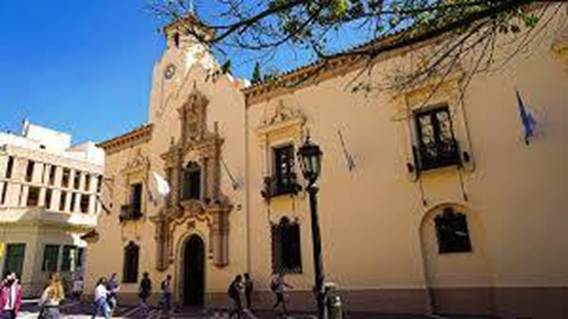
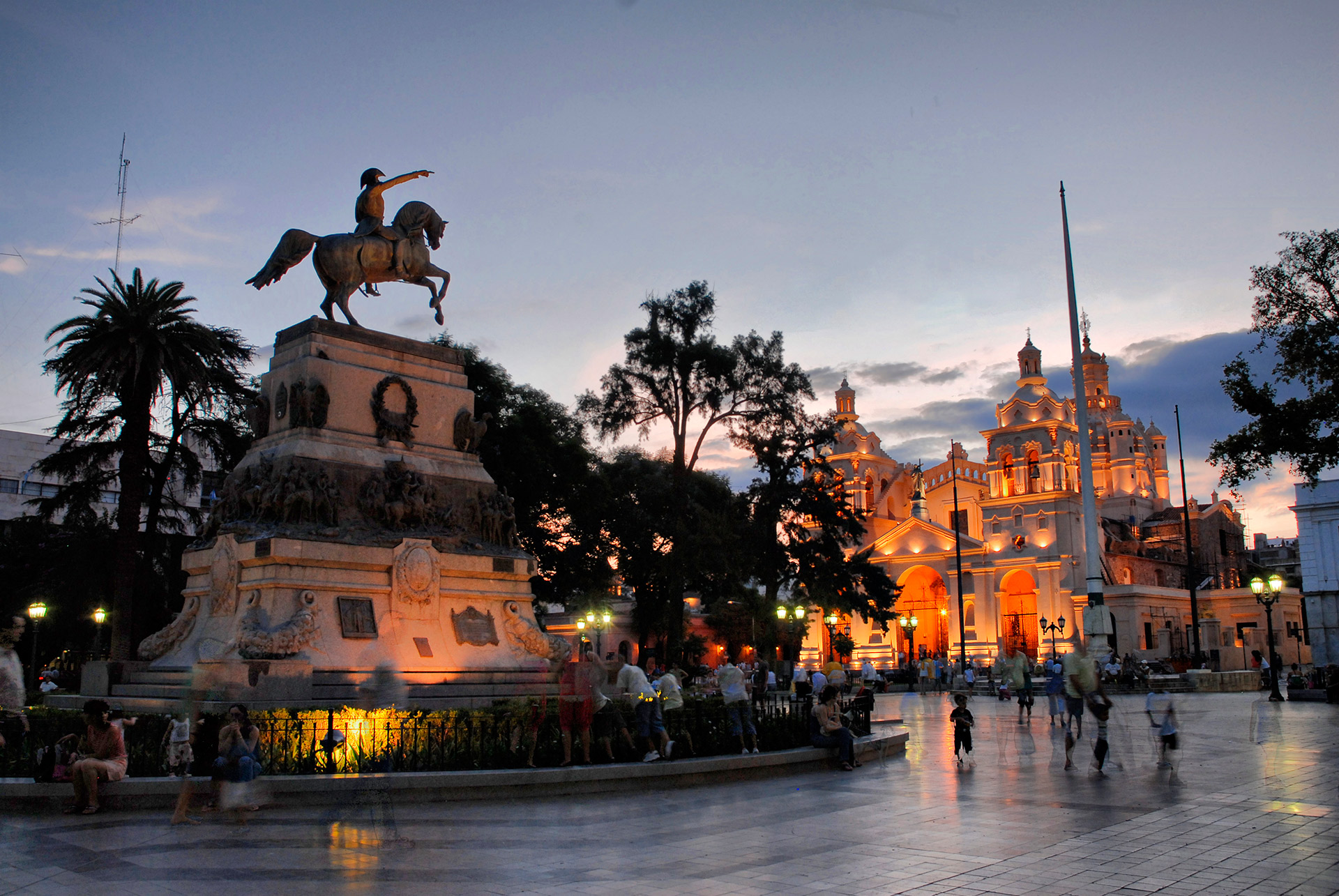
San Martín Square, The Cathedral Jesuitic school “Monserrat”
- Tourist Attractions (https://cordobaturismo.gov.ar)
- Drive with high quality photos: https://drive.google.com/drive/folders/1w_4hpoXeBcu6YQjqePfin4oCKXHiMWo0?usp=sharing
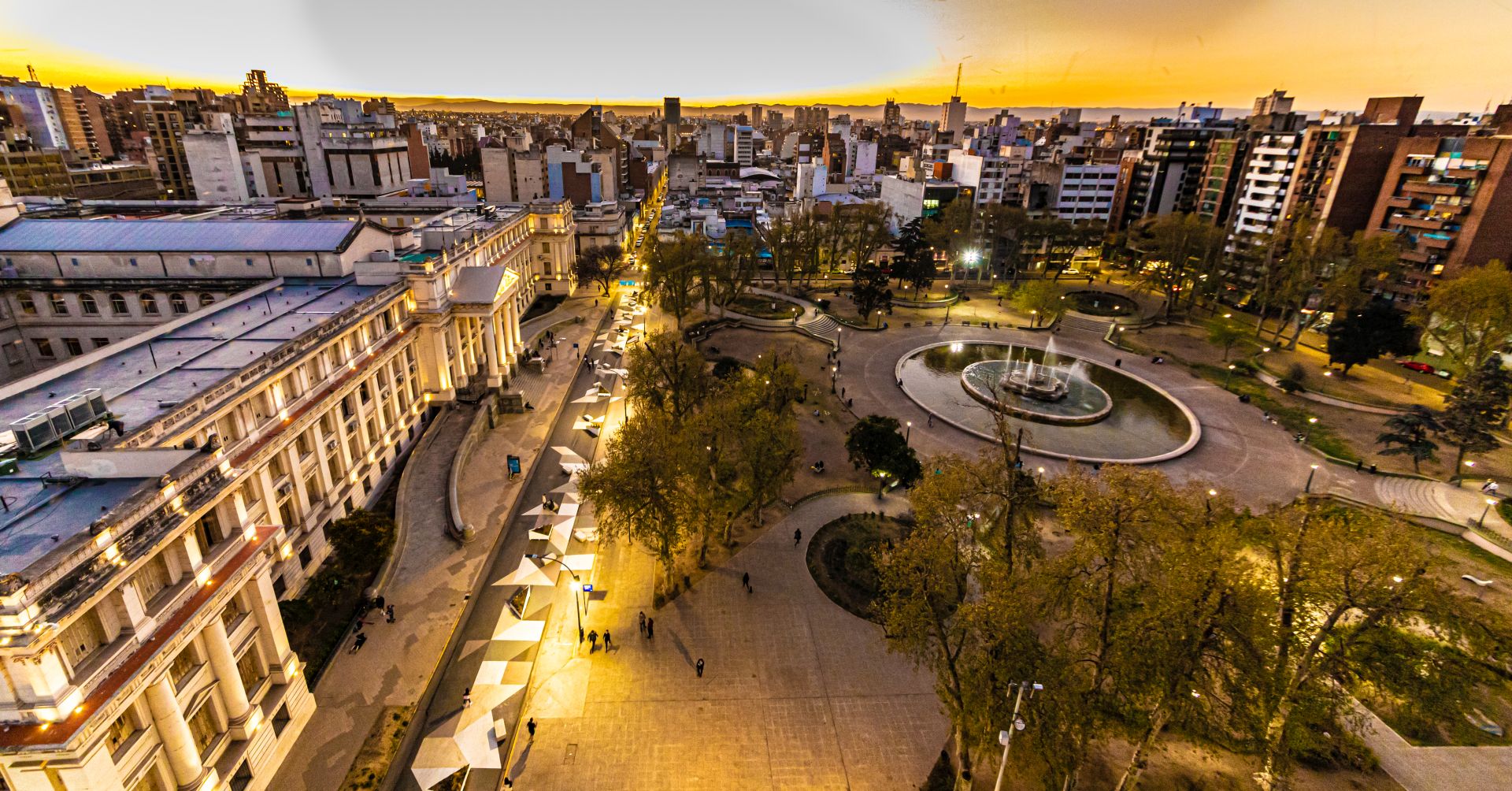
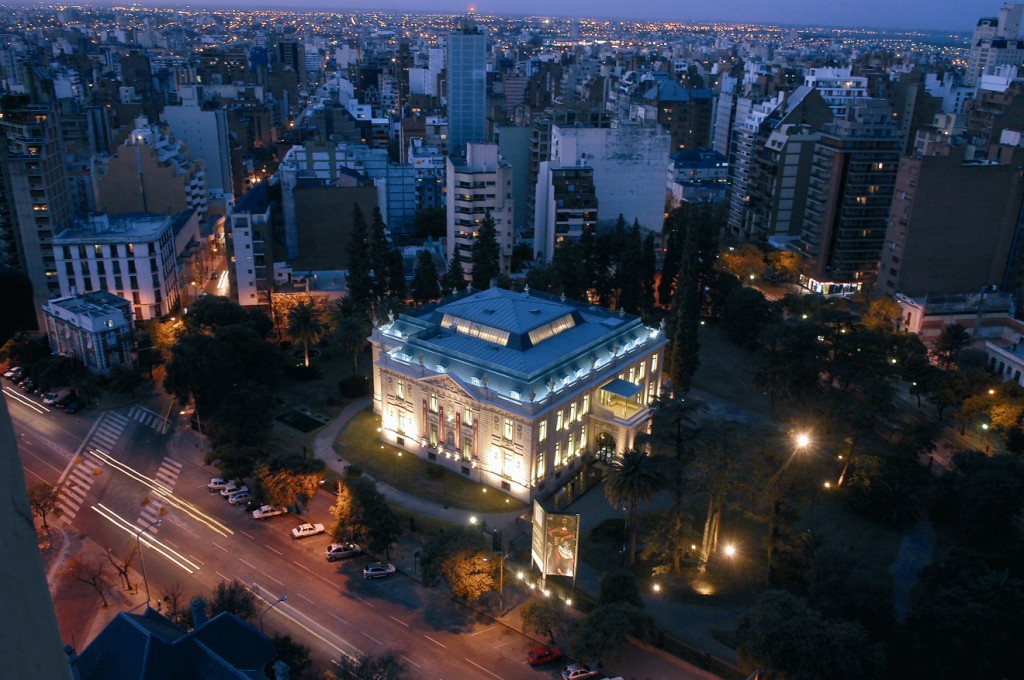
Participants of the meeting in Córdoba will have the opportunity to enjoy a unique combination of scientific exchange and cultural discovery. The city and its surroundings offer a wide variety of attractions that can be easily integrated into the conference social program. Córdoba is one of the most important scientific and educational centers in Latin America. Founded in 1573, the city combines a rich cultural heritage with a dynamic research ecosystem and a vibrant student population.
Home to the Universidad Nacional de Córdoba (UNC), one of the oldest universities in the Americas, and multiple CONICET institutes, Córdoba provides an ideal environment for international scientific exchange.
Accommodation
Córdoba offers a well-developed and diverse accommodation infrastructure capable of hosting large international events. The city provides approximately 8,800–9,000 hotel beds in formal establishments, covering a wide range of categories from budget options to 5-star hotels .
In addition to traditional hotels, Córdoba features a broad ecosystem of apart-hotels, hostels, and short-term rental accommodations, significantly expanding total capacity and flexibility for conference participants. The city’s accommodation sector is continuously growing and adapting to increasing tourism demand, supported by strong private-sector investment and high occupancy rates throughout the year
Registration Fee Waiver
The Fee-Waiver Program is intended to facilitate participation at Annual or Topical Meetings by scientifically and/or technically qualified scientists and engineers with financial hardships that may limit their ability to attend. Generally fee-waivers will be awarded to persons from financially disadvantaged countries.
The fee-waiver program will be governed by the following rules:
1. A maximum of 10 waivers of registration fees for the Annual Meeting and 5 waivers for the Topical Meeting may be granted.
2. Selection of recipients is limited to ISE members in good standing. The criteria for selection include scientific merit (based on the submitted abstract and application) and demonstrated financial need. Preference will be accorded to persons from countries recognized by the ISE to be financially disadvantaged.
3. The fee-waiver program will be advertised on the web site of each meeting.
4. An application for fee waiver must be sent to the ISE office no later than 1 month before the deadline for advance (early registration, reduced fee) registration.
5. Waiver applications received after the deadline will not be considered.
6. The waivers are decided by the whole Executive Committee, taking into account the criteria described in point 2 and any other relevant considerations. The decision will be communicated by email to all applicants (successful and unsuccessful) by the ISE Office at least two weeks before the deadline for advance registration.
7. In order to receive the waiver, the successful applicant must pre-register for the conference and pay the registration fee by the early registration date to ensure that an oral or poster presentation is not deleted from the program. The recipient of the waiver will receive reimbursement for the paid registration fee at the conference registration desk. If the recipient is unable to pre-register, which also means forfeiting an oral presentation, the waiver will be provided only when the recipient registers onsite at the conference.
8. The waivers are valid only for the successful applicant and may not be transferred to another participant.
9. No member may obtain waivers for both the Topical Meeting and the Annual Meeting in the same year.
10. Only applications prepared using the Application Form will be considered (Right button click, “Save target as…”).
Exhibitors and Sponsors
Exhibit at the 44th Topical Meeting of the International Society of Electrochemistry
This ISE Topical Meeting in Cordoba, Argentina will bring together internationally recognised scientists. Typically the expected delegate number for ISE Topical meetings will be about 200 delegates.