- Home
- Important Dates
- Organizing committee
- Scientific program
- Plenary Talks
- Venue & Location
- Accommodation
- Abstract Submission
- Registration
Glasgow, Scotland – Electrochemistry for a sustainable future
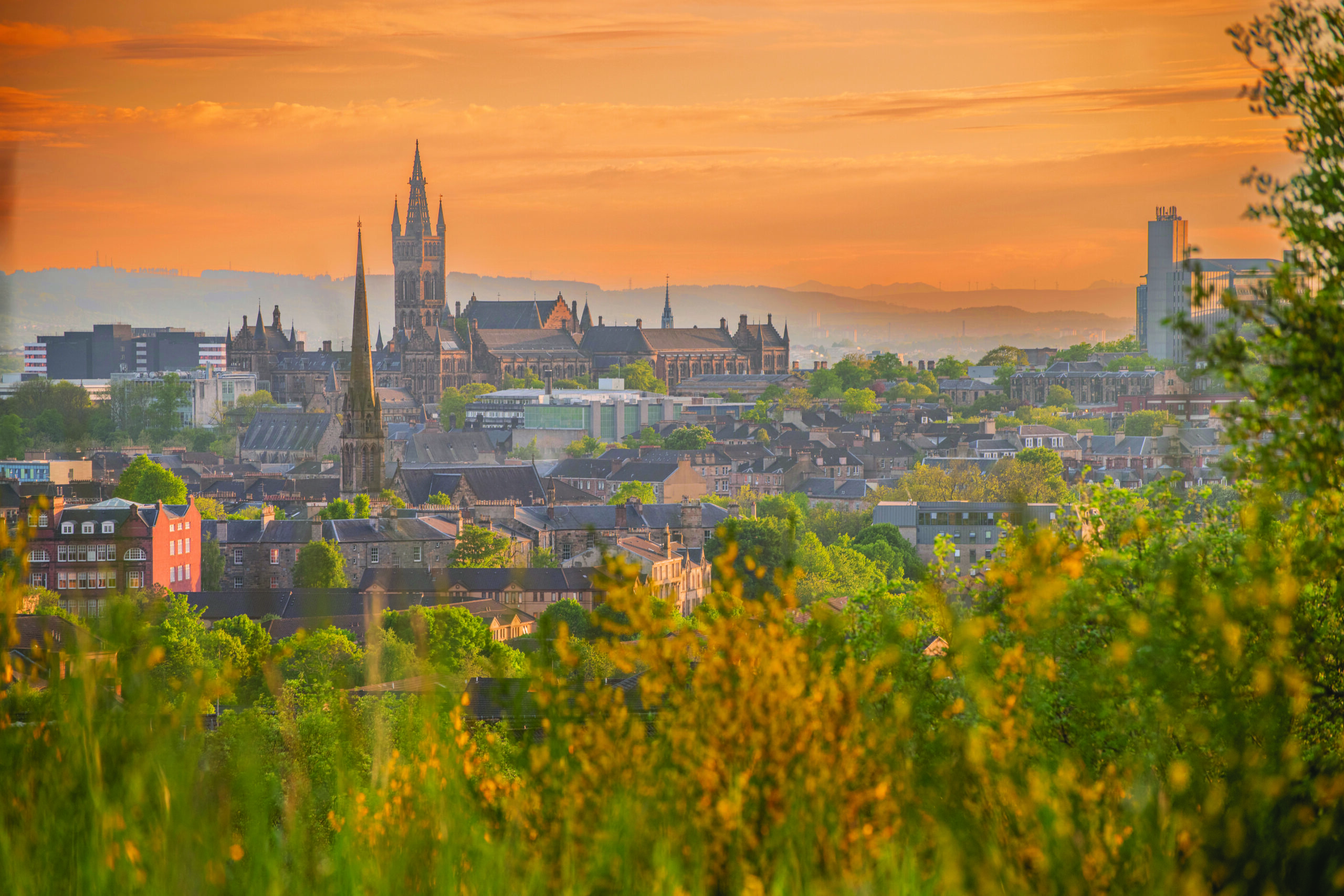
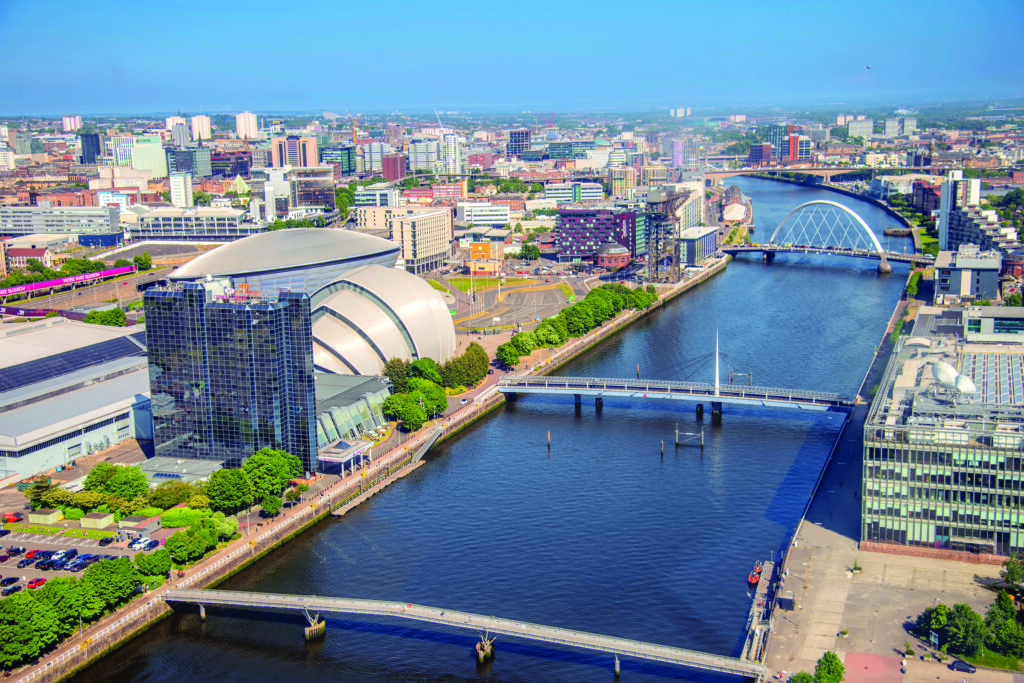
Glasgow is Scotland’s cultural powerhouse and one of the UK’s most vibrant cities, bursting with activity and a down-to-earth personality devoted to good times. It boasts an extensive civic arts collection, featuring masterpieces by Dali, Van Gogh, Degas, Renoir, Whistler, and Monet, displayed in many free museums and galleries, including the iconic Kelvingrove Art Gallery and Museum and the award-winning Riverside Museum. The meeting will be at the Scottish Event Campus (SEC), located riverside in Finnieston, halfway between the city centre and the west end, where tourist attractions, hotels, restaurants, and shops are found. The SEC offers flexible meeting and exhibition space, just 15 minutes from Glasgow Airport and close to an on-site train station with a 3-minute journey to the city centre.
Glasgow boasts rich architectural heritage. Its affluent past has left exquisite
Victorian buildings, notably the City Chambers, majestically overlooking George
Square—the city’s civic heart. Glasgow Cathedral exemplifies Scotland’s medieval architecture. Next to the Cathedral is the mesmerizing Necropolis, a cemetery adorned with incredible sculptures and stories. Additionally, Glasgow is the gateway to Scotland, with breathtaking scenery nearby perfect for exploring the West Coast islands, Loch Lomond, highland whisky distilleries, majestic castles, and numerous golf courses.
Glasgow, Scotland, and the UK have a rich scientific tradition, being home to
Faraday, James Watt, Maxwell, Kelvin, and Butler. Scotland boasts a vibrant tech
ecosystem in Life Sciences, Renewable Energy, Data Science, Artificial Intelligence, and Advanced Manufacturing, featuring a strong research base, a growing startup scene, and a supportive business climate. This fosters active engagement between the local scientific community and ISE delegates.
We look forward to welcoming you to Glasgow in 2027!
Important Dates
- Opening date for abstract submission: 1 December 2026
- Opening date for registration: 9 March 2027
- Deadline for abstract submission: 31 March 2027
- End of early registration: TBD
- Registration deadline for presentation(s): 17 June 2027
- (All presenting authors of accepted abstracts are expected to register. Abstracts without a registered presenting author will be withdrawn from the event on TBD)
- Conference begins: 5 September 2027
Organizing Committee
Angel Cuesta (Co-Chair), Aberdeen, UK
Robert Dryfe (Co-Chair), Manchester, UK
Mark Symes, Glasgow, UK
Plamen Atanasov, Irvine, CA. USA
Andrea Russell, Southampton, UK
Monica Santamaria, Palermo, Italy
Francesca Soavi, Bologna, Italy
Wataru Sugimoto, Ueda, Japan
Iryna Zenyuk, Irvine, CA. USA
Local Organizing Committee
Mark Symes, Glasgow, UK
Sudipta Roy, Glasgow, UK
Ieuan Seymour, Aberdeen, UK
Sunita Dey, Aberdeen, UK
Edward Brightman, Glasgow, UK
Stephen Lyth, Glasgow, UK
Zeliha Ertekin, Glasgow, UK
Scientific Program
The scientific program offers Pleanary Lectures, Symposis, Tutorials related to the following fields of electrochemistry:
- Electroanalysis, Sensors & Biosensors
- Biological and Medicinal Electrochemistry
- Batteries
- Fuel Cells
- Electrochemistry for CO2 Conversion, Hydrogen Production and Ammonia Synthesis
- Supercapacitors
- Electrochemistry of Nano-materials
- Electrocatalysis
- Electrodeposition and Electroplating
- Corrosion and Passivity
- Electrochemical Engineering and Technology
- Environmental Electrochemistry
- Molecular and Supramolecular Electrochemistry
- Photoelectrochemistry
- Theoretical and Computational Electrochemistry
- Interfacial Electrochemistry
- Spectroelectrochemistry
- Scanning Probe Microscopy Methods in Electrochemistry
- Electrochemical Instrumentation
- Electrochemistry at liquid-liquid intefaces
Plenary Lecturers
Table of Contents
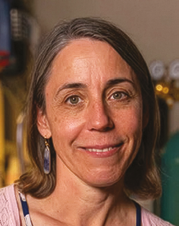
Caroline Ajo-Franklin
Rice University, Houston, TX, USA
Caroline Ajo-Franklin is the Ralph and Dorothy Looney Professor of BioSciences at Rice University and the founding director of the Rice Institute for Synthetic Biology. Before joining Rice, she was a Staff Scientist in the Molecular Foundry, a Department of Energy User Facility for Nanoscience at Lawrence Berkeley National Lab, for 12 years.
Prof Ajo-Franklin’s research program has pioneered the use of synthetic biology for real-time environmental bioelectronic sensors and for living materials. She is internationally recognised for her work on engineered living materials and bioelectronic sensing/actuation.
Prof Ajo-Franklin’s research exploits cellular-electrical connections to transmit information via devices that combine the skills of the living and inorganic worlds. A parallel aspect of her lab focusses on combining naturally occurring microbial systems and designer proteins to autonomously assemble functional living materials.
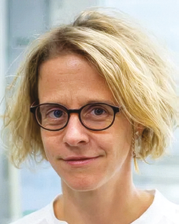
Julia Kunze-Liebhäuser
University of Innsbruck, Austria
Julia Kunze-Liebhäuser is a Full Professor of Materials and Electrochemistry and Head of the Institute of Physical Chemistry at the University of Innsbruck. Her research investigates the solid/liquid interface under reaction conditions, with a focus that has evolved from corrosion science to energy conversion and storage, including electrocatalysis and (ion) battery research.
Prof. Kunze-Liebhäuser is particularly recognized for applying operando analytical techniques — including electrochemical scanning tunneling microscopy (EC-STM), electrochemical IR spectroscopy (EC-IRRAS), in situ electrochemical product analysis (GC and DEMS), and electrochemical near-ambient-pressure X-ray photoelectron spectroscopy (EC-XPS) — to relate electrocatalytic activity, selectivity, and stability to electrode morphology and structure, the nature of reaction intermediates and products, and the chemistry of the interface.
In 2004, she received the Hans-Jürgen Engell Prize of the ISE.
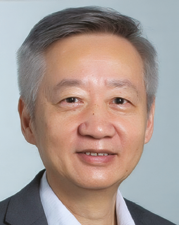
Zhong-Qun Tian
Xiamen University, China
Prof. Zhong-Qun (ZQ) Tian is a Tan Kah Kee Professor of Chemistry at Xiamen University and an internationally prominent figure in electrochemical spectroscopy, surface-enhanced Raman spectroscopy (SERS), and interfacial electrochemistry. He received his BSc from Xiamen University (1982) and his PhD from the University of Southampton (1987), where he worked with Martin Fleischmann.
His current research spans spectro-electrochemistry, interfacial and energy electrochemistry, SERS/plasmonics, and more. Prof. Tian is a Member of the Chinese Academy of Sciences, Fellow of the World Academy of Sciences and of the International Society of Electrochemistry, of which he served as President (2019–2020).
The Electrochimica Acta 2026 Gold Medal is conferred upon Prof. Zhong-Qun Tian in recognition of his thorough and transformative contributions to electrochemistry. His pioneering work in electrochemical Raman spectroscopy, notably by extending it to Pt and Fe-group metals and by developing the SHINERS method, has enabled the study of materials previously inaccessible to conventional Raman techniques, providing unprecedented insights into the structure and dynamics of interfaces and interphases.
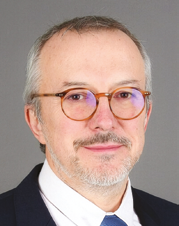
Patrice Simon
University Paul Sabatier Toulouse, France
Patrice Simon is Distinguished Professor of Material Science at the Université of Toulouse III – Paul Sabatier and a member of the French Academy of Sciences (2019). He is a former director of the Alistore European Research Institute dedicated to Li-ion battery research and now Director of the French network on Electrochemical Energy Storage (RS2E) and Director of the French national research program on Batteries (PEPR Batteries).
His research activities focus on the fundamental understanding of electrochemical processes at the material/electrolyte interfaces in electrodes for electrochemical energy storage devices (batteries and electrochemical capacitors).
Prof Simon has received several awards for his scientific contribution, including Grants from the European Research Council (2012, 2020), the Brian Conway Prize for Physical Electrochemistry from the ISE (2018), the Silver Medal from the CNRS (2015), and nomination as a Clarivate Citations Laureate (2018). He is a Fellow of the ISE (2017) and was a recipient of the Royal Society of Chemistry Horizon Prize (2021).
Simon has been an ISI “Highly Cited Researcher” since 2016 and is a Member of the Academia Europaea.
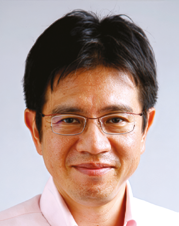
Atsuo Yamada
The University of Tokyo, Japan
Since 2009, Atsuo Yamada has been a Professor at the University of Tokyo, after 10 years (1990-2000) as a Research Scientist at the Sony Research Center and serving as the Laboratory Head of Sony Frontier Science Laboratories between 2000 and 2002.
He was a visiting scholar for one year in John B. Goodenough’s lab at the University of Texas at Austin, an Invited Professor at ICBM/CNRS (University of Bordeaux) and, since 2023, Distinguished Professor at the SKKU Nobel-Class Research Cooperation Center.
Prof Yamada’s research focuses on battery materials and is characterised by sophisticated approaches employed to explore structure-property relationships. It includes very early-stage exploration/optimization of LFP and, more recently, identification and understanding of several functional electrolytes.
He has been awarded the Spriggs Award and the Purdy Award from ACerS, the Scientific Achievement Award from ECS Japan, the IBA Research Award, the Battery Division Research Award from the Electrochemical Society and the Science & Technology Award from MEXT.
Venue and Location
The meeting will be held at the Scottish Event Campus (SEC), a major conference centre in Finnieston, Glasgow, Scotland – www.sec.co.uk. Located at the Clyde’s riverside, it is just a short walk away from the 100+ bars and restaurants of Finnieston and within walking distance of Glasgow’s city centre and west end. There is also an on-site train station (3-minute journey to the city centre).
Climate
Glasgow, on Scotland’s west coast, benefits from the Gulf Stream. Average daily
highs in September are 16 °C (62 °F) and lows are 10-11 °C. It receives about 115 hours of sunshine in September, with sunrise around 06:30 and sunset around 20:00.
Transportation
Flights: Delegates can fly directly to one of three international airports surrounding Glasgow, with Glasgow Airport just 15 minutes from the city center and Edinburgh less than an hour away. Currently, there are direct flights from over 165 scheduled destinations to Glasgow and Edinburgh, including London, New York, Paris, Dubai, Toronto, Amsterdam, Barcelona, Berlin, Boston, Brussels, Chicago, Cologne, Doha, Dublin, Frankfurt, Istanbul, Marseille, Madrid, Milan, Munich, Naples, Orlando, Philadelphia, Prague, Rome, Stockholm, Vienna, Warsaw, Washington, and Zurich. Additionally, there are multiple connecting flights (approximately one hour duration) between Glasgow and London Heathrow, Paris, Frankfurt, and Amsterdam daily, providing connections to most major cities worldwide.
Rail: Glasgow is well connected by train across the UK and Europe. We have over 20 trains a day to London. This connection to London also allows delegates to travel by the Eurostar through London St Pancras to Calais-Fréthun, Lille, Amsterdam, Rotterdam, Brussels, Paris, Bourg-Saint-Maurice, Lyon, Avignon, and Marseille.
Accommodation
Glasgow provides a range of accommodations near the SEC, with about 11,000
hotel rooms within 2 miles of the city center. This includes over 1,400 on-site
rooms at the SEC across 8 hotels, around 9,500 within a 15-minute travel time,
and over 2,000 student rooms, many within walking distance.
Abstract Submission
Abstract submission opens on 1 December 2026.
Please return to this page after that date to submit your abstract.
Event registration for participants
Registration opens on TBD
Please return to this page after that date to register.